
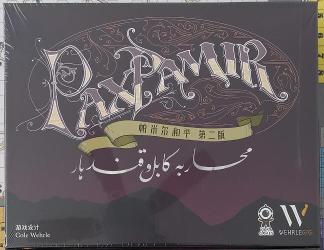
2019 · 政治
帕米尔和平:第二版
Players take the roles of nineteenth-century Afghan leaders navigating competing foreign powers after the collapse of the Durrani Empire. The game frames imperial influence from the Afghan perspective as players recruit allies, place military units on a shared map, and build a personal tableau called a court. Turns mainly involve buying cards from a central market and playing them into a row to gain abilities, deploy forces, and trigger actions that affect other players and the board. Periodic Dominance Checks evaluate whether coalitions or fragmented local power determine scoring; points are awarded either for coalition influence or individual power bases. The game cycles through checks and resets until a player wins by securing a decisive point lead or after the final check.
- 人数
- 1–5 最佳 4 人
- 游戏时长
- 45–120 分钟
- 年龄
- 13+
- 复杂性
- 3.8 / 5
关于这款游戏
- Publisher


来自 Ludoya 牌桌的照片
在 Ludoya 中查看所有照片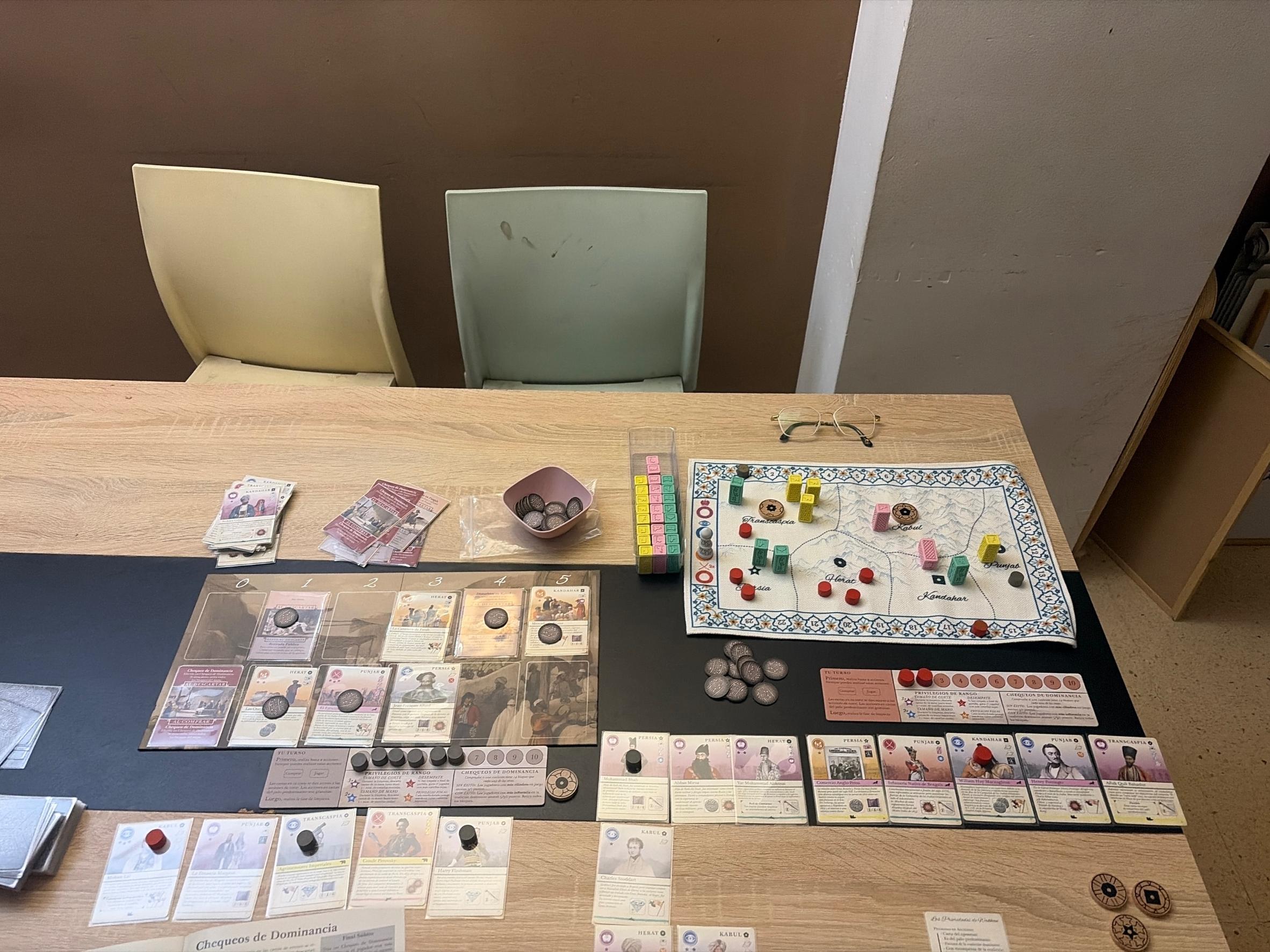
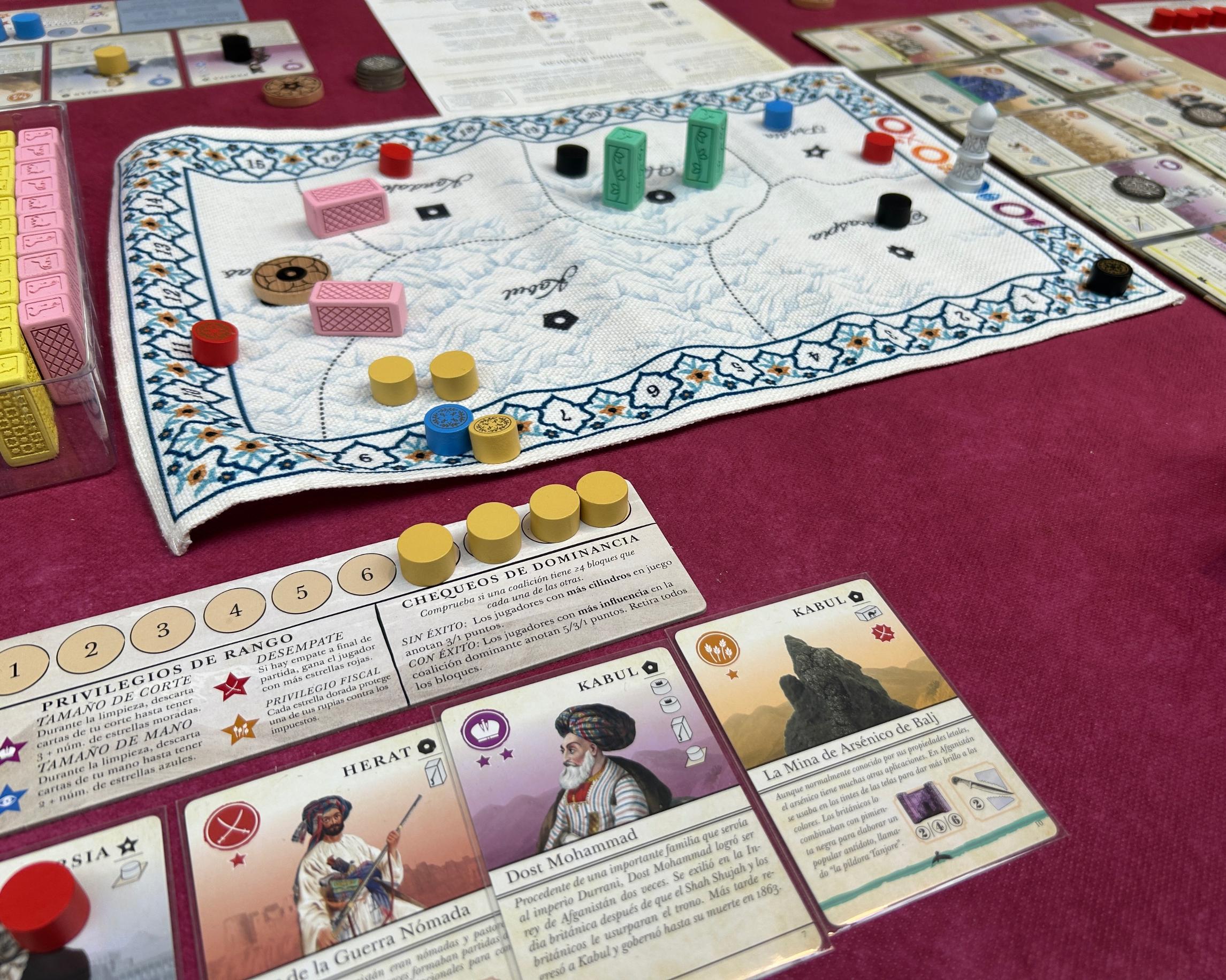
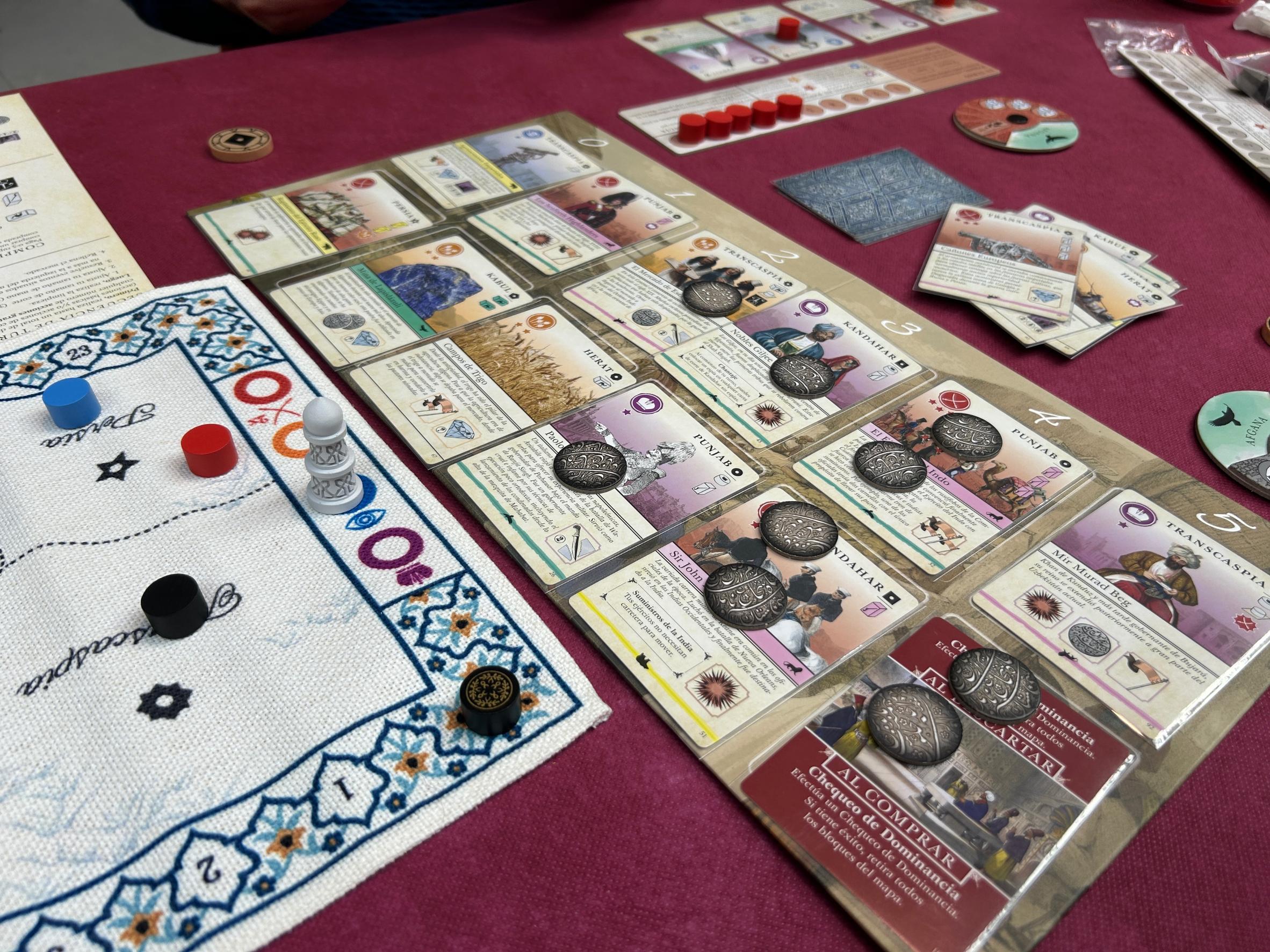
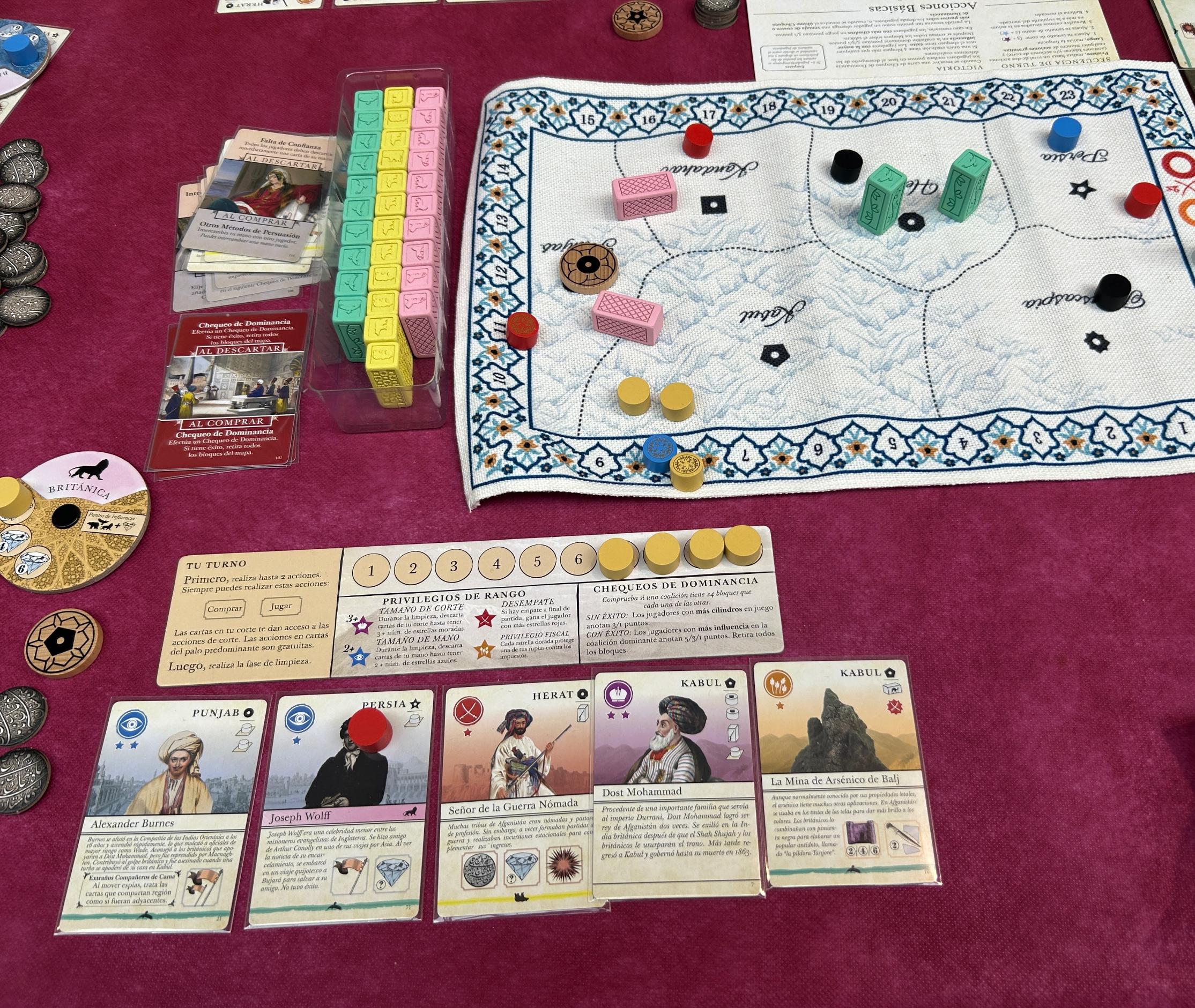
在 Ludoya 的牌桌上
在 Ludoya 中查看完整统计- 857
- 已记录对局
- 826
- 玩家
- 1h 33m
- 平均时长
- 185
- 收藏数
- 53
- 愿望清单数
8.3/10
基于 91 条 Ludoya 评测
Balleflass10.0 Will probably rate it higher after more plays. Seems very promising so far. Simple and streamlined mechanics but still so complex because of the hostage/ruling-tax/bribery mechanic on top of the often changing allegiances. Great game. EDIT* Yeah, thought so, this is a 10. Also, thanks to this game, I can sell about 40-50% of my collection. Paladin 63.5x88mm double matte (old style).
Garfield9.0 #29.1 Very interesting game. Meaningful decisions to make and a lot of interaction. [c] Theme: ★★★☆☆ <!-- size 7]Ok --> Gameplay: ★★★★☆ <!-- size 7]Many meaningful decisions --> Interaction: ★★★★★ <!-- size 7]A lot of different interaction --> Artwork: ★★★★☆ <!-- size 7]Nice --> Luck: ★★★☆☆ <!-- size 7]Random cards --> Strategy: ★★★★☆ <!-- size 7]Multiple strategies possible --> Components: ★★★★☆ <!-- size 7]Very nice --> Play duration: ★★★☆☆ <!-- size 7]Ok for such a game --> Easy to teach: ★★★☆☆ <!-- size 7]Ok (45min) --> Rules quality: ★★★★☆ <!-- size 7]Very good --> Setup time: ★★☆☆☆ <!-- size 7]Card deck takes some time --> No downtime: ★★★☆☆ <!-- size 7]Ok --> Replay value: ★★★★☆ <!-- size 7]Different strategies possible --> [/c]
andycted9.0 (Update after a few more games with experienced people) This game has two phases, in its life on your shelves. The first one is the one where you internalise not only rules, but dynamics and interactions. At that point you will have a lot of fun already, but some stuff will appear a bit clunky and out of place (double scoring, calculations on dominance scoring, five players, etc). All this disappears the moment you stop calculating and playing the market/board only and instead mainly playing your opponents, the alliances and guessing their objectives. Then the game opens itself and becomes excellent at any player count. Needs players willing to give and receive punches but more importantly, to negotiate and talk
规则问题
由 Ludoya 的规则助手根据规则书回答。
When does a Dominance Check happen and how is it scored?
Dominance Checks are resolved when a Dominance Check event is purchased or when one is revealed during cleanup, and final-check points are doubled (page 9, 15). If a single coalition has the most blocks and at least four more than each other coalition the check is successful and loyal players score by influence (5/3/1); otherwise players score for cylinders in play (3/1) with ties split as described (page 15).
Do I have to pay a bribe if I play a card from a region someone else rules?
Yes — if another player rules the card’s region you must pay them a bribe equal to the number of that ruler’s tribes in the region (the ruler may waive any portion); if you don’t pay (or it’s not waived) the play is canceled as if it never happened (page 11).
How does the favored suit affect actions and purchase costs?
The favored suit determines which court cards grant bonus actions that do not count against your two-action limit, and the favored-suit marker can be moved by cards you play (pages 6, 12, 11). If the military suit is favored, purchase costs are doubled — you place two rupees on each leftward market card when buying (page 10).
How do I pay for a card in the market and what happens to rupees I place there?
A card’s cost depends on its column (leftmost free, then 1, 2, etc.); you pay by placing one rupee on each card to the left in the same row (if a slot is vacant you pay to the opposite row's same column), and any time you place a rupee on a market card you may not purchase that particular card that turn (page 10). Action costs that pay the market place rupees on the rightmost market cards of both rows and follow the same purchase-blocking rule (page 12).
What does it take to 'rule' a region and when do I take the ruler token?
To take a region’s ruler token you must have at least one tribe in the region and a plurality of ruling pieces (more than any other player individually); if there is a tie no one rules the region, and ruler tokens are taken or returned immediately when ruling status changes (page 7).
How does the Betray action work and what is a prize?
Betray discards a card where you have a spy (cost 2) and you may then accept the discarded card as a prize by tucking it behind your loyalty dial; if the prize’s coalition differs from your current loyalty you must remove your gifts, prizes, and patriots matching your old loyalty and then change loyalty (page 14, page 7).







游戏信息(人数、游戏时长、年龄、制作人员)来自 BoardGameGeek。