
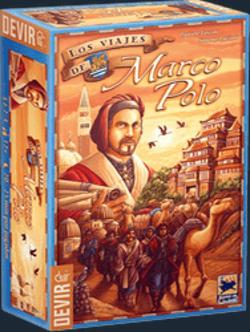
2015 · Medieval
Los Viajes de Marco Polo
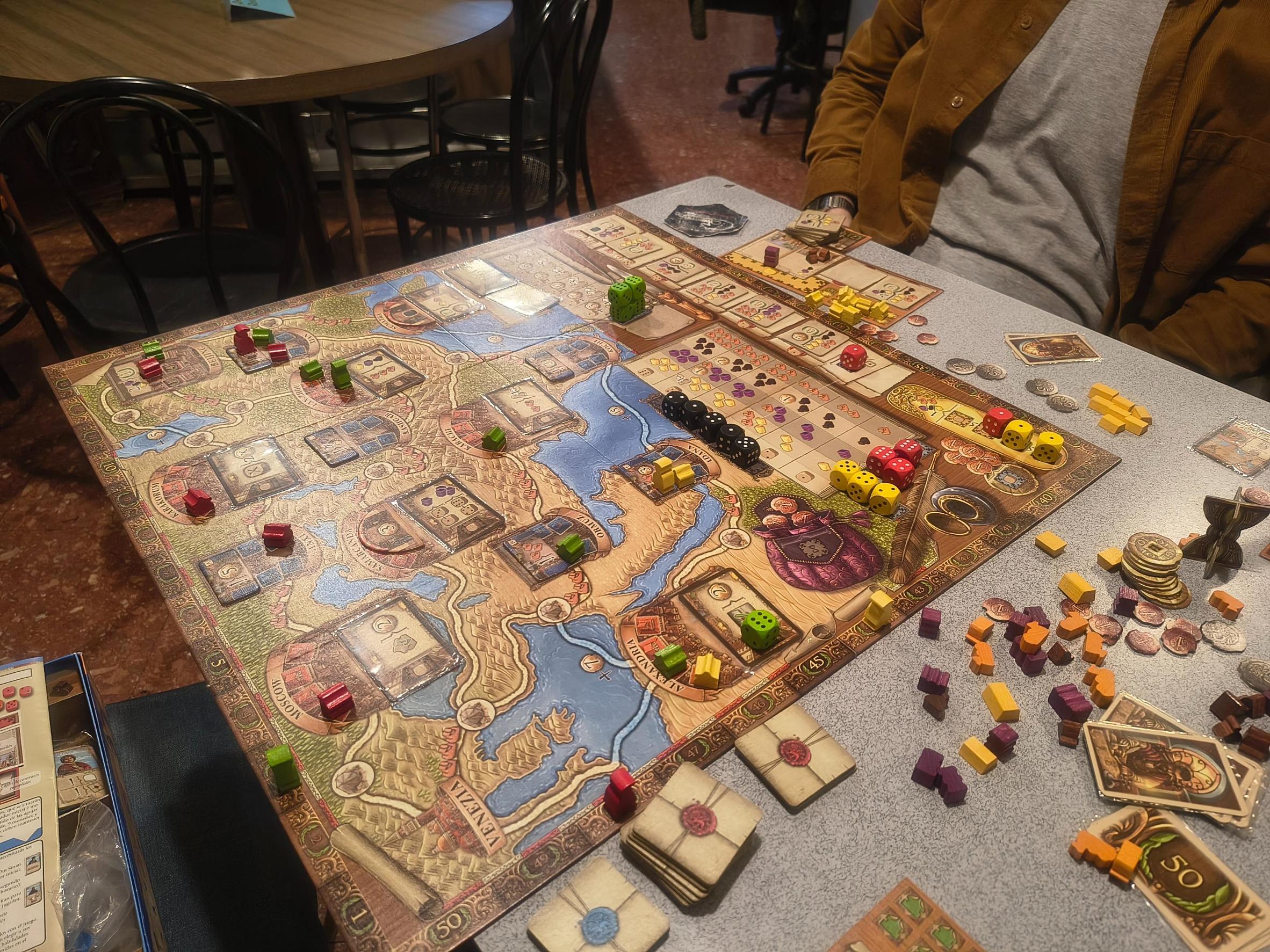
Los jugadores asumen diferentes personajes históricos y recrean un viaje de caravana desde Venecia hasta la corte de Kublai Khan. Cada jugador tiene una habilidad única y tira cinco dados personales en cada ronda para realizar acciones colocando dados en espacios de acción. Las acciones incluyen conseguir recursos o dinero, adquirir y cumplir contratos, viajar por múltiples rutas para colocar puestos comerciales en ciudades y usar acciones especiales específicas de cada ciudad. Los dados de mayor valor desbloquean opciones más fuertes, pero pueden tener costes si los oponentes ya ocupan la misma acción. La partida dura cinco rondas y se puntúa por contratos cumplidos, puestos comerciales (especialmente en Pekín) y objetivos secretos de ciudad.
- Jugadores
- 2–4 mejor con 4
- Duración
- 40–100 min
- Edad
- 12+
- Complejidad
- 3,2 / 5
Sobre el juego
- Arte
- Publisher




Expansiones
Verlas en Ludoya
Fotos de mesas de Ludoya
Todas las fotos en Ludoya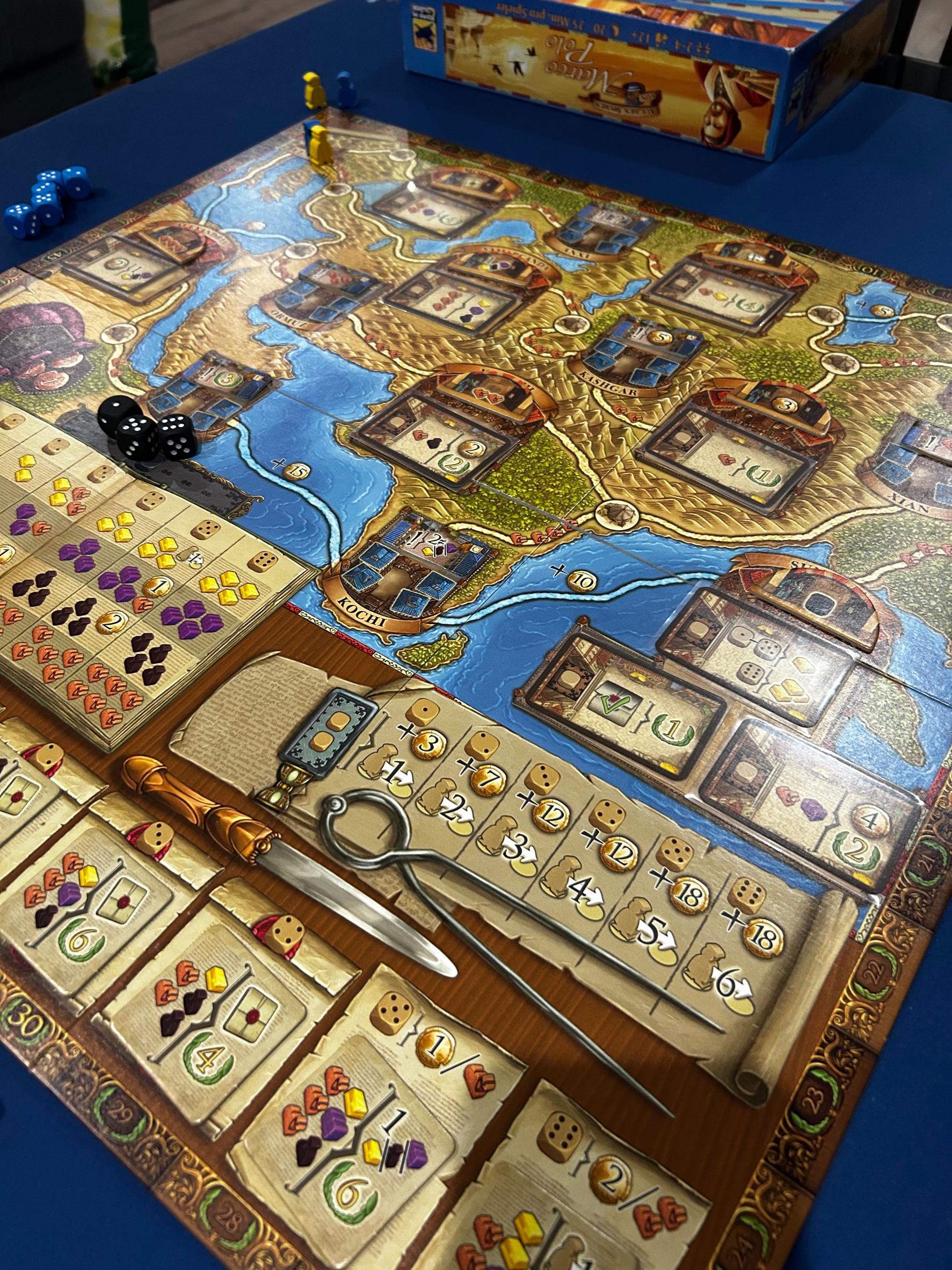
Dónde comprarlo
Precios de tiendas y copias de segunda mano, revisados cada día.
En las mesas de Ludoya
Todas las estadísticas en Ludoya- 1305
- Partidas registradas
- 711
- Jugadores
- 1h 23m
- Partida media
- 175
- En colecciones
- 24
- En listas de deseos
- 1
- En preventa
7,3/10
de 123 reseñas en Ludoya
Daniel7,0 4
Dídac7,9 Arribo tardíssim a aquest joc i la veritat és que m’ha sorprès com de bé es manté en el temps. Ja tarden a reeditar-lo.
Evan4,6 At the start of this game, you are assigned an incredibly strong player power with the intention that everyone's asymmetric power looks and feels too good, yet with everyone getting an overpowered ability that theoretically the game remains balanced. The tightness of resources and the shortage of rounds will make accomplishing even modest goals, very difficult. Your plans will not work, as your poor dice results and other players beating you to actions you need will inevitably end you one short of whatever it is you needed, be it gold, camels or money. When you take an action needing multiple dice, you resolve for the lowest value in the lot. Then, in order to resolve an action that someone else has chosen before you, you have to pay money equal to the lowest value in your lot of dice. This means that higher values rolled get you bigger results, but you might wind up not being able to afford those results, so having lower values makes your actions cheaper. The game has an extremely high amount of variation. There are lots of player powers, all different, the city spaces get populated with randomize cards and there are enough of those that you might not see the same card for many games, and you can randomize the positions of the different income city abilities, to make it so that no path is quite the same twice. The game is an intriguing, but also often frustrating puzzle that I can't decide if I love or hate. :star: Art, Iconography and components functional :star: Clever or interesting mechanisms :star: Reasonably low downtime between turns with mildly AP players :star: Multiple plays stay interesting :nostar: Low or mitigatable luck elements :star::star::star::nostar::nostar: Raw enjoyment


Dudas de reglas
Respondidas a partir del reglamento por el asistente de reglas de Ludoya.
Do I place one or two dice when I take the Travel action, and how far can I move?
You place two dice for Travel and your movement distance equals the lower of the two dice; you then pay the cost per space (coins or camels) and place/relocate a trading post as required (pp.9–11).
When I take goods from the Grand Bazaar, do I have to take the exact number shown or can I take fewer?
The number of goods you gain is determined by the die you use, and you may take the amount shown by that die (lower dice are allowed in lower-value slots) — follow the Bazaar slot values and the die you place (p.7).
How many contracts can I take with one die and how are they scored?
You place one die on the contract action to take one or two contract cards (depending on slot/availability); completed contracts are scored when you fulfill their requirements, and higher-value dice can give extra contract bonuses (p.8).
If I spend a die to use a city card, can I use the city action multiple times?
Yes — spending one die on a city card lets you use that city's action a number of times equal to the die's value (p.11).
What bonus actions are available (rerolls, adjustments, black die) and are there limits?
Bonus actions include a reroll (cost 1), adjusting a die by ±1 (cost 2), and taking the black die (cost 3) with the restriction that you may take the black die only once per turn; occupied action spaces can be used by paying the required coin cost shown (pp.12–13).







Quien lo tiene también tiene





Gratis, en web, Android e iOS
Juega a Los Viajes de Marco Polo con Ludoya
- Tenlo en tu colecciónControla tu copia y sus expansiones, préstala a tus amigos o ponla en tu lista de deseos y te avisamos cuando baje de precio.Añadirlo a tu colección
- Registra cada partidaPuntuaciones, ganadores, temporizadores y fotos, y luego tus estadísticas: porcentaje de victorias, número de jugadores favorito, mejor puntuación.Registrar una partida
- Resuelve dudas de reglasPregunta lo que quieras sobre las reglas y obtén una respuesta sacada del reglamento, con la página donde comprobarla.Preguntar al asistente de reglas
- Encuentra gente con quien jugarloClubes, noches de juegos y eventos cerca de ti que sacan este juego a la mesa.Ver eventos
Datos del juego (jugadores, duración, edad, créditos) de BoardGameGeek.